Canonical
on 9 May 2017
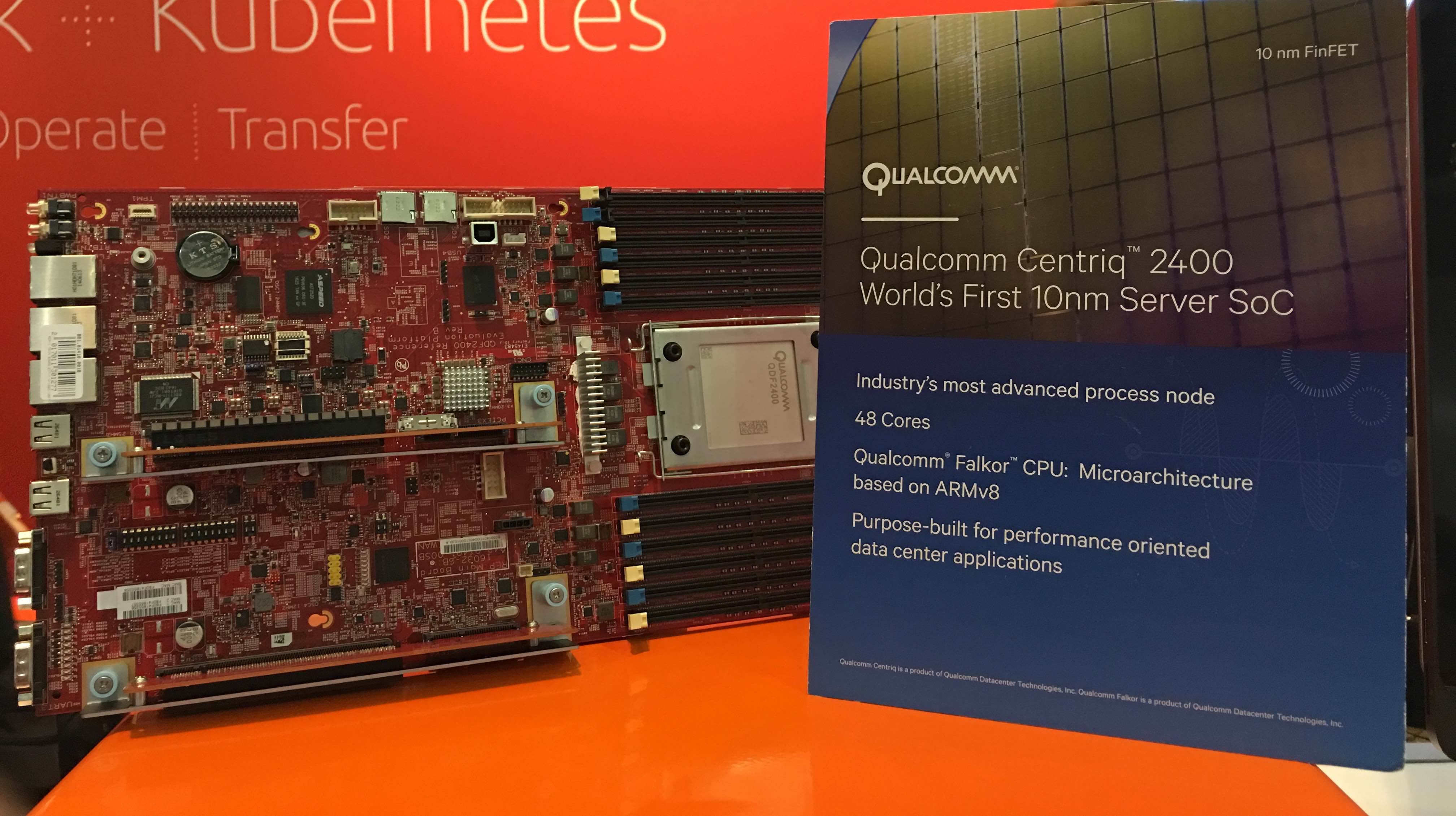
Canonical has been one of the earliest visionary stalwarts igniting and driving early market enablement for 64-bit ARM server compute. With the commercial availability and support for Ubuntu Openstack on 64-bit ARM v8-A architecture, Canonical further accelerated the industry’s imagination for innovative platform architectures enabling the next generation of scale and automation.
In its purest essence, our long-term collaboration with Qualcomm Data Center Technologies is symbolic of a greater market vision of providing an edge-to-cloud experience driven by the untapped potential of 5G. At this week’s Openstack Summit 2017, we feature a first instantiated view of that with a Open Stack NFV Infrastructure running on Qualcomm Centriq™ 2400, world’s first 10nm server processor.
What is particularly interesting about this demo is the idea of unprecedented scaling by enabling numerous VNFs and VMs running concurrently over hundreds of cores, due to the high-core, high-scale nature of Qualcomm Centriq™ 2400 processor. And by running multiple instances on bare metal, telco operators can now scale and automate sessions based on demand and service level needs, all the while reducing TCO and OpeEX.
This demo on the Qualcomm Centriq™ 2400 processor also highlights the concept of a solution-oriented product readily enabled by open source. Specifically for telco providers and enterprise customers who are transitioning to a cloud-based or software-defined model, the demo illustrates the wholeness of Canonical’s product portfolio with the frictionless consumable nature of OPNFV. Starting with Ubuntu 16.04 running across all 6 nodes, the demo further leverages Canonical’s MaaS and LXD containers to spawn dynamically new virtual instances, and Juju for complete application orchestration and management at the user space level.